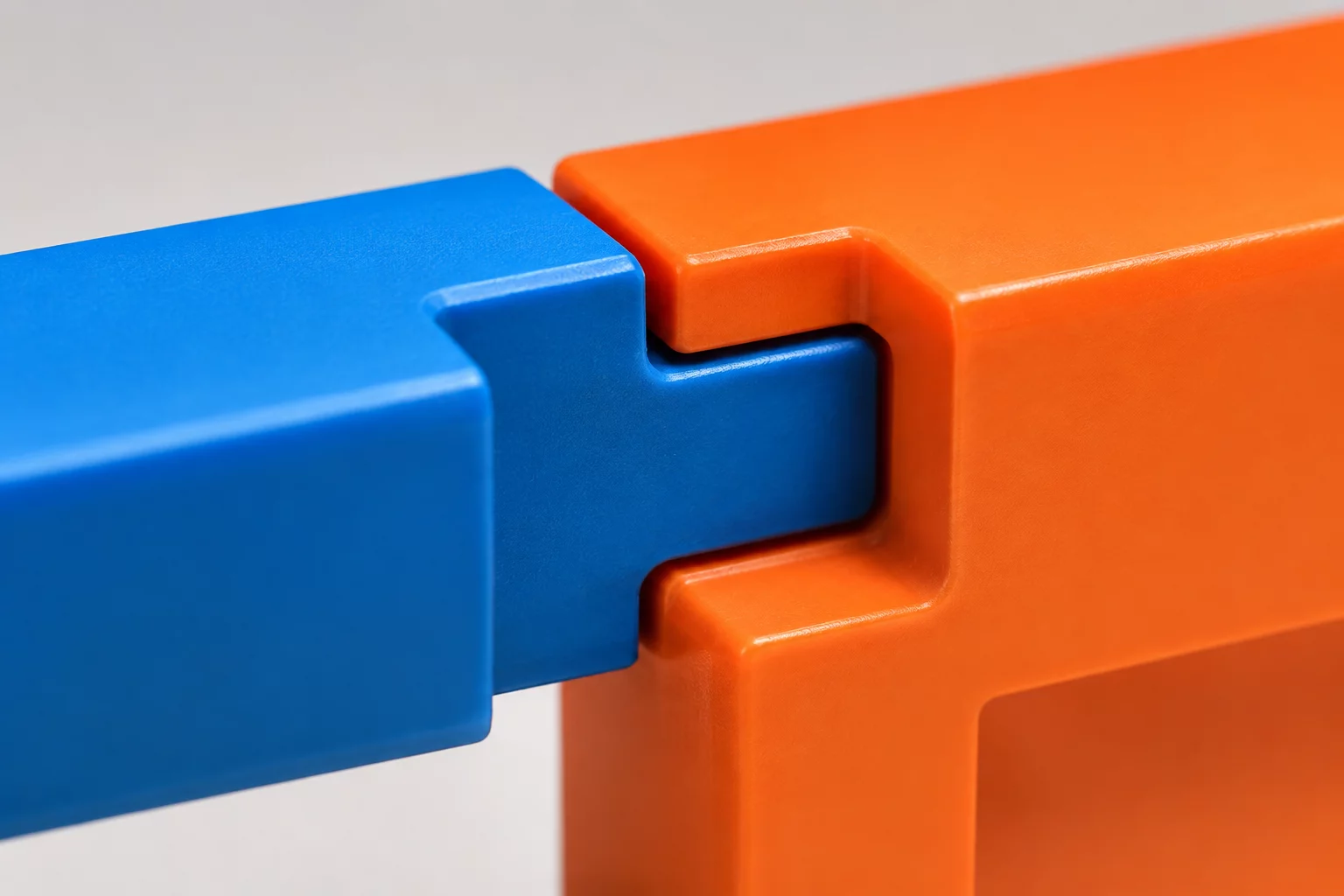
Track Overview & Pedagogical Value
Designing standalone objects in Tinkercad gives learners a false sense of security because digital space has no friction or thermal shrinkage. Real engineering problems emerge when two parts join together or when a custom bracket must slip around an existing desktop monitor stand. Fit constraints force designers to move past decorative styling and confront functional tolerances, material clearance, and mating geometry.
Learners working within this track calculate realistic gaps for mechanical interlocks rather than drawing matching dimensions face to face. They discover why a 20 mm peg will bind tight inside a 20 mm hole on standard FDM 3D printers, requiring deliberate 0.3 mm to 0.5 mm offsets. This direct feedback loop connects abstract digital sketches to physical workshop realities.
Engineering Challenge Boundary
Every component produced under this track must mate with a predefined physical object or connect to a companion 3D-printed piece using mechanical friction or interlocking tabs without adhesives.
Enforced Constraint Specifications
Incorporate a mandatory 0.4 mm uniform radial clearance between male and female mating profiles to ensure smooth manual assembly straight off the build plate without post-processing.
The outer envelope of the assembly must slide entirely into a standard classroom pencil caddy opening or grip a 25 mm desk edge securely without rocking.
Secure the secondary component using an integrated snap-latch or dovetail slide, eliminating screws, metal pins, and chemical bonding agents.
Classroom & Makerspace Implementation
Implement this track by providing students with everyday classroom objects like whiteboard markers, digital calipers, or wooden desk borders as physical anchors. Students measure the anchor item, log its true dimensions into their design notebooks, and model corresponding mating enclosures.
- Measure physical reference objects using digital calipers and record exterior variances across multiple points.
- Model simple test coupon joints in Tinkercad before committing to the full-size assembly print.
- Conduct hands-on fit audits in class by checking assembly resistance and recording whether joints slide freely or lock firm.